What is amortisation in finance?
- Written by: admin
- Category: Uncategorized
- Published: March 27, 2026
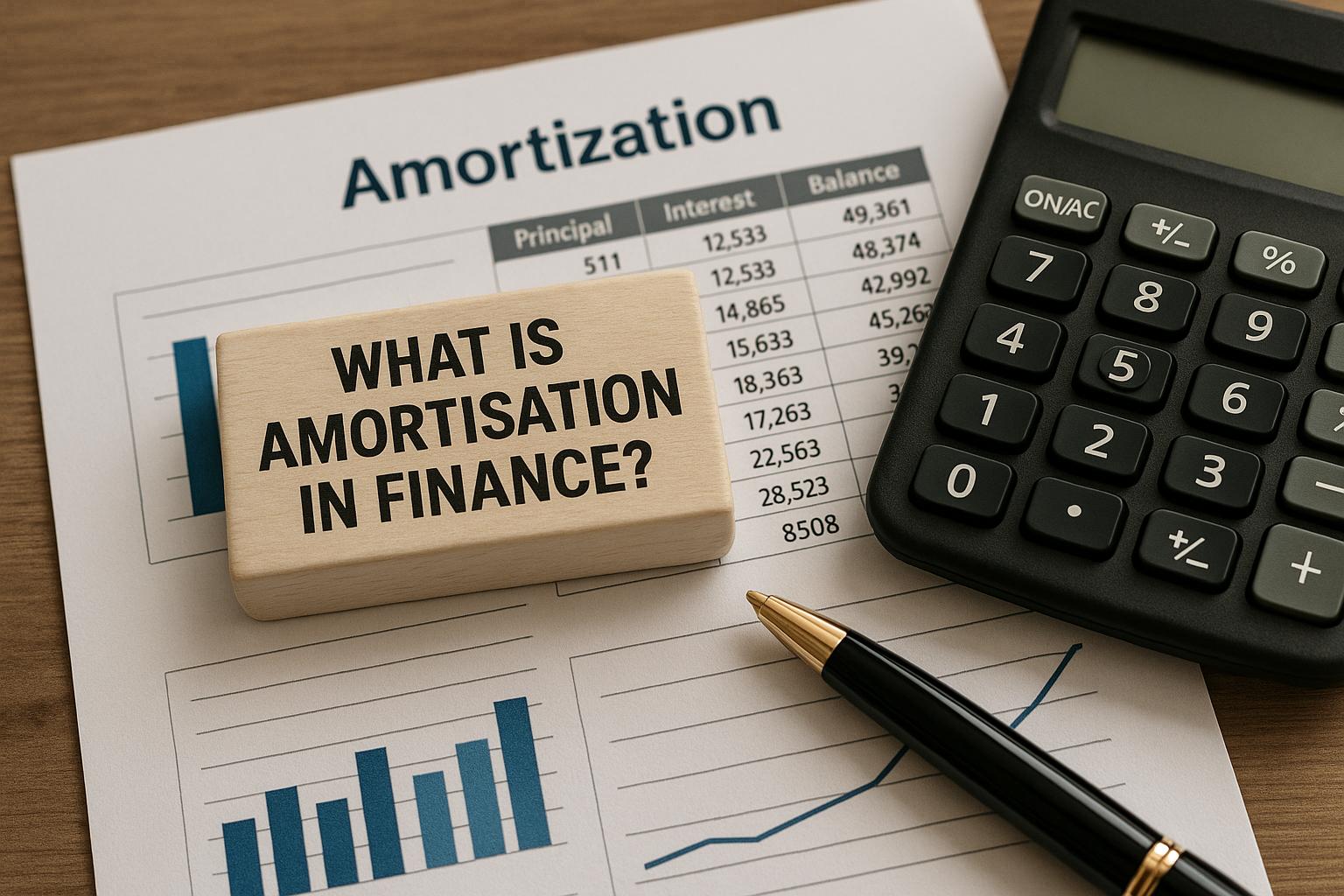
Understanding Amortisation in Finance
In the realm of finance and accounting, amortisation is a fundamental concept that plays a significant role in how both businesses and individuals manage loans and asset valuations. The primary function of amortisation is to dictate how payments are structured over time and to determine the allocation of costs for intangible assets.
Definition of Amortisation
In a financial context, amortisation refers to the method of spreading a loan into multiple fixed payments over an established tenure. Each payment is comprised of two elements: interest—the cost of borrowing—and the principal amount. Initially, the majority of each payment is applied towards the interest, but gradually, with each successive payment, a larger portion is directed towards repaying the principal amount, ensuring that the outstanding loan balance declines steadily over time.
Amortisation of Loans
Concerning loans, amortisation serves as a strategic mechanism to ensure that repayment plans are both manageable and predictable for borrowers. With each scheduled monthly payment, a borrower covers part of the interest and part of the principal, gradually reducing their debt until the loan is fully paid off at maturity. This amortisation process is commonly reflected in several types of loans such as home mortgages, automobile loans, and various kinds of personal loans. The consistent repayment schedule allows borrowers to plan their finances effectively, knowing exactly how much they need to pay over the entire duration of the loan.
Amortisation of Intangible Assets
Beyond the scope of loans, amortisation also relates to the allocation of the cost of intangible assets over their applicable lifespan. Intangible assets, unlike physical assets such as machinery or buildings, include items like patents, copyrights, trademarks, and goodwill—assets that do not have a physical form yet provide value to businesses. The amortisation process for intangible assets involves spreading out their cost across their useful life to accurately portray their decreasing value on financial statements. This not only aligns with the matching principle of accounting but also guides stakeholders in understanding the true asset value as it is used over time.
Importance of Amortisation
The significance of amortisation in financial execution and reporting is profound. Regarding loans, it enables borrowers to comprehend their future financial obligations while assisting lenders in forecasting cash flows. When viewed from the perspective of intangible assets, amortisation acts as a measure that allows businesses to gauge asset valuations and the returns on investments. It is a key aspect for corporations aiming to determine accurate profit margins by expensing the costs of assets systematically over time, thereby preventing distortions in their financial health depiction.
Amortisation Schedule
An amortisation schedule is a detailed report that displays each payment throughout the loan duration, offering a comprehensive view of how the amounts applicable toward interest and principal evolve with time. These schedules are essential tools for financial planning, as they furnish insights into the total interest paid over the loan’s lifetime, enabling borrowers to make informed decisions, such as when refinancing might be beneficial or when accelerating payments will lead to early loan settlement.
Impact on Taxation and Financial Statements
From an accounting standpoint, amortisation influences a company’s financial documentation by decreasing the value of assets presented in the balance sheet. Concurrently, it expends the amortised amount on the income statement, subsequently affecting taxable income. This practice is integral for businesses engaged in constructing long-range tax strategies and financial tactics. Amortisation aligned with tax regulations permits businesses to capitalize on tax deductions linked to depreciation of intangible assets, ultimately optimizing their tax liabilities.
Conclusion
Acquiring knowledge on amortisation is crucial for making astute decisions in both corporate and personal financial spheres. Mastery of how amortisation impacts loans and intangible assets empowers individuals and organizations to effectively control their economic resources and facilitate sustainable financial growth. For those seeking to delve deeper into the nuances of amortisation, an abundance of financial resources and calculation tools are readily available online from esteemed financial establishments and service providers. By leveraging these tools, stakeholders can enhance their planning capabilities, consequently fortifying their financial stance in a competitive landscape.
This article was last updated on: March 27, 2026