
Archives: What is a balance sheet?
Understanding a Balance Sheet
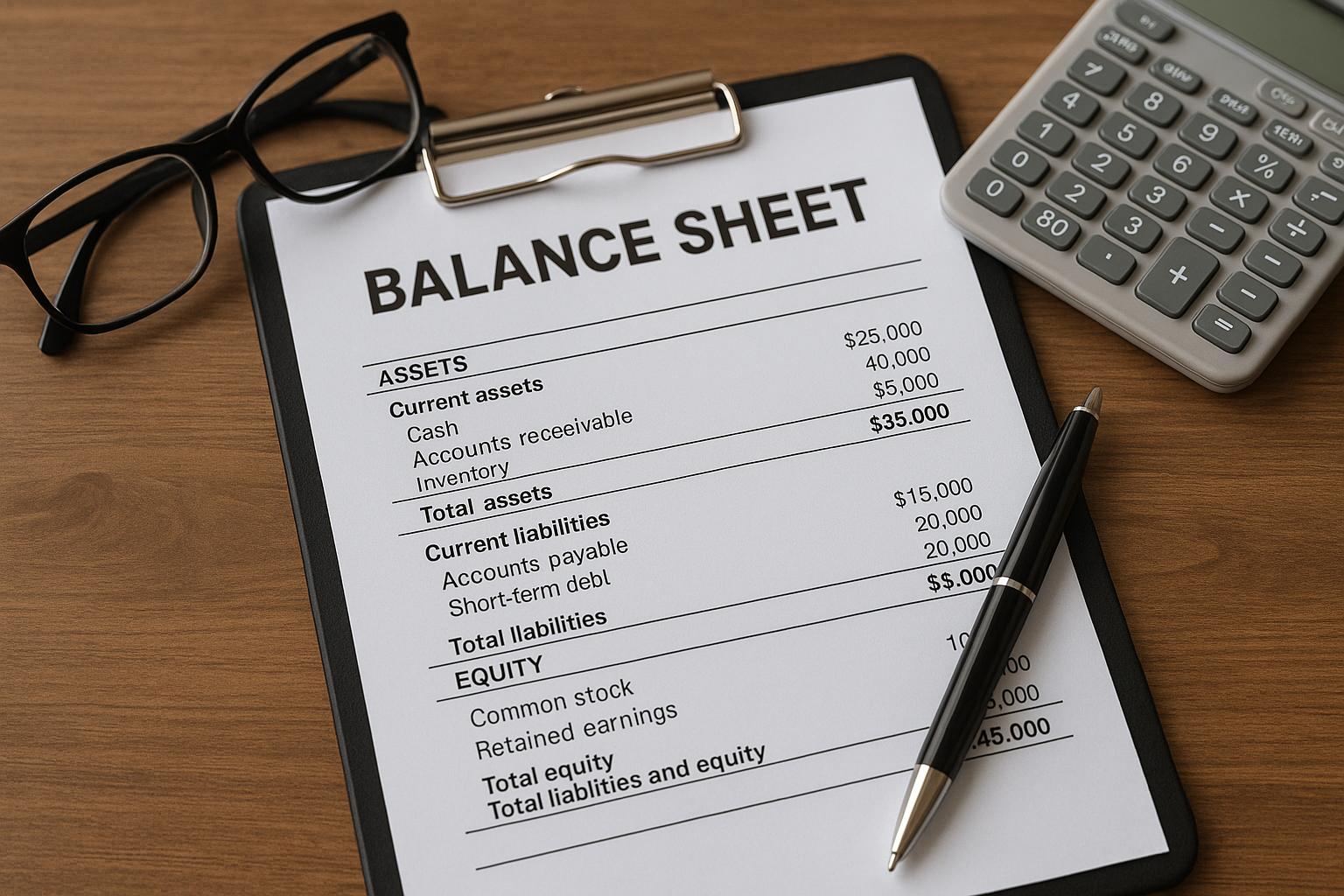
A balance sheet is a pivotal financial statement that offers a clear picture of a company’s financial position at a distinct moment. This document serves as one of the three key financial statements within corporate finance, the others being the income statement and the cash flow statement. Each of these documents provides unique insights into various aspects of a company’s financial health, but the balance sheet specifically highlights the financial condition through its presentation of assets, liabilities, and equity.
The Structure of a Balance Sheet
Analyzing the structure of a balance sheet reveals its segregation into three principal sections: assets, liabilities, and equity. This structure mirrors the accounting equation: Assets = Liabilities + Equity. This fundamental equation underpins the principles of double-entry bookkeeping, ensuring that for every transaction, the accounting records remain balanced and accurately reflect the company’s financial position.
Assets
Assets constitute resources that a company controls and expects to generate future economic benefits. Within a balance sheet, assets are typically classified into two categories for clarity and detailed analysis:
Current Assets: These assets are characterized by their high liquidity, meaning they can be converted into cash or are expected to be used up within a one-year timeframe. Examples of current assets include cash, which provides immediate liquidity; accounts receivable, representing funds owed to the company; and inventory, which is the stock of goods available for sale. These items are essential for the day-to-day operations of a business.
Non-current Assets: Non-current assets are those investments and resources intended for long-term use, usually beyond a year. This category includes tangible assets such as property, plant, and equipment, including buildings and machinery used in operations. Additionally, it encompasses intangible assets like patents and trademarks, which provide competitive advantages and contribute to the company’s value over time. The distinction between these asset types helps stakeholders understand the time horizon over which resources will be utilized and provide revenue.
Liabilities
Liabilities on a balance sheet represent the obligations a company must fulfill in the future. They indicate the financial responsibilities that arise from past transactions. Like assets, liabilities are divided into two categories to clarify their maturity:
Current Liabilities: These include obligations that must be settled within a year. Examples are accounts payable, which reflect the company’s short-term IOUs for goods and services acquired; short-term loans, which are borrowings due within a short duration; and accrued expenses, which are costs incurred but not yet paid. Monitoring current liabilities helps in assessing the liquidity of the company and its ability to meet short-term commitments.
Non-current Liabilities: In contrast, non-current liabilities are obligations due beyond one year. This category includes long-term debt like bonds payable, which are structured to be settled over multiple years, deferred tax liabilities resulting from timing differences in tax payments, and pension obligations, representing the future commitments to retired employees. The understanding of non-current liabilities provides insights into the long-term financial strategy and stability of the business.
Equity
Equity, sometimes known as shareholder’s or owner’s equity, represents the residual claim on the assets of an entity after all liabilities have been deducted. This financial segment offers a glimpse into the shareholders’ interest in the company and the financial cushion available beyond obligations. Equity comprises several components:
– Common Stock: Represents the basic ownership share in a company, offering voting rights and a proportional claim on profits or dividends.
– Preferred Stock: A class of ownership with preferential rights over common stock, often in dividend distributions or during asset liquidation.
– Additional Paid-in Capital: These are capital inflows beyond the par value of stock, reflecting the extra amounts investors pay over the nominal stock price during issuance.
– Retained Earnings: Accumulated profits that are reinvested in the business or set aside for future obligations, rather than being distributed as dividends.
– Treasury Stock: Represents shares repurchased by the company, reducing the amount of outstanding stock in the open market and often supporting stock price.
Examining these components of equity provides clarity on the company’s financial strategy, especially concerning reinvestment versus shareholder returns.
The Importance of a Balance Sheet
The balance sheet holds critical importance for various stakeholders in a business environment. For investors and shareholders, it offers a detailed view of a company’s liquidity status and overall financial health, enabling an informed evaluation of risk and return potential. By analyzing assets relative to liabilities, investors can assess whether a business is a safe investment or if there is potential for growth.
For managers, a balance sheet is a strategic tool that aids in making informed internal decisions. By understanding available financial resources, managers can allocate capital effectively, pursue viable investment opportunities, and manage daily operations without jeopardizing financial stability. It promotes efficient resource management and highlights areas that might need improvement or adjustment.
Creditors and lenders turn to the balance sheet to determine the security of their financial involvement with the company. It helps them evaluate the ability of a company to repay loans, make timely interest payments, and fulfill other financial commitments. The leverage levels visible on a balance sheet often guide lenders in dictating terms of credit.
Conclusion
Grasping the nuances of a balance sheet is crucial for anyone engaged in finance or corporate management. This comprehensive snapshot into a company’s financial status equips stakeholders with the knowledge required to align decisions with their financial goals. Whether it’s for investment, strategic planning, or credit assessment, understanding how each element of the balance sheet fits into the broader financial picture elevates the quality of financial decisions. For those pursuing further insights into financial statements, there are ample resources available to expand on these foundational concepts.
Archives: What is asset allocation?

Understanding Asset Allocation
Asset allocation is a fundamental concept in investment management that plays a pivotal role in determining the success of an investment portfolio. It is a strategic approach that involves the distribution of investments across various asset categories such as stocks, bonds, and cash equivalents. The primary goal of asset allocation is to strike a balance between risk and reward, tailored to the investor’s specific goals, risk tolerance, and investment horizon.
Why Asset Allocation Matters
The significance of asset allocation lies in its ability to mitigate risks associated with the unpredictable nature of financial markets. Investment portfolios that are well-diversified have the potential to cushion against market volatility and financial downturns. Unlike focusing solely on selecting individual securities, asset allocation emphasizes dividing the portfolio in a way that significantly influences its overall performance.
Key Components of Asset Allocation
The crux of asset allocation is the varied investment categories or asset classes. Each class has distinct characteristics and contributes differently to the risk-return profile of the portfolio.
Bonds: Bonds are typically less risky than equities and provide regular income through interest payments. They serve as a stabilizing force within a portfolio, mitigating the overall risk.
Cash and Cash Equivalents: This asset class includes instruments that offer high liquidity and low risk. It acts as a buffer to preserve capital, albeit with lower returns.
Strategic vs. Tactical Asset Allocation
Asset allocation can be broadly divided into two approaches: strategic and tactical.
Tactical Asset Allocation: This approach allows for short-term deviations from the target asset mix, responding to current market opportunities and valuations. It is based on the belief that markets can be inefficient, thus presenting opportunities to outperform benchmarks.
Considerations for Proper Allocation
Determining an appropriate asset allocation strategy is contingent upon individual circumstances and financial objectives. Several factors need consideration during this process:
Income: An individual’s income level influences how they allocate assets. Those with stable, high incomes might allocate more towards high-risk, high-reward investments.
Financial Obligations: Investors’ current and future financial responsibilities can shape their tolerance for risk. Those with substantial financial commitments may prefer a more conservative asset mix.
Risk Tolerance: Personal comfort with variability in investment returns plays an integral role in shaping asset allocation. It is essential to align the asset mix with one’s capacity and willingness to endure financial risk.
In summary, asset allocation is not only an integral part of developing an investment portfolio but also a continuous process requiring periodic review and adjustment. As investor circumstances and market conditions evolve, so too should the asset allocation to ensure alignment with overarching investment goals.
Ultimately, a well-planned asset allocation strategy paves the way for a robust financial plan, striking a balance between the desire for higher returns and the necessity of risk management. By applying the principles of asset allocation judiciously, investors can strive for a more secure financial future.
Archives: What is an asset in finance?

Understanding Assets in Finance
In the intricate landscape of finance, an asset serves as a cornerstone—representing any resource owned by individuals, corporations, or countries that is projected to deliver future economic benefits. Assets play a pivotal role in accounting due to their position as one of the three primary components of the balance sheet. They stand balanced against liabilities and equity, serving as a gauge of financial health and operational efficiency.
Types of Assets
Assets can be divided into several classifications, each pertinent to specific financial assessments and strategies. One of the predominant approaches to categorizing assets is their division into current and non-current categories, forming a clearer picture of a company’s liquidity and long-term financial standing.
Current Assets
Current assets are typically considered short-term due to their characteristic ability to be converted into cash or otherwise expended within a year. Each type brings a particular importance to immediate financial operations:
– Cash and cash equivalents represent the most liquid forms of assets, essentially cash in hand or reserves stored within a bank. This category ensures that the business can meet immediate expenses and investments without financial strain.
– Accounts receivable denote funds that are anticipated from clients in exchange for services rendered or products delivered. They identify short-term cash flows into the business, crucial for ongoing operational needs.
– Inventory, encompassing goods available for sale, ties directly to sales operations, directly impacting revenue generation and stock management strategies.
Non-Current Assets
In contrast to current assets, non-current or long-term assets usually benefit economic pursuits over extended periods, often exceeding a year:
– Property, plant, and equipment (PP&E) situate tangible assets like buildings and machinery. These tangible investments often form the backbone of infrastructural capabilities, impacting both production capabilities and expansion potential.
– Intangible assets, including patents, trademarks, and copyrights, remain non-physical yet hold substantial value for their role in defining brand identity and competitive advantage in the market.
– Investments engage in long-term securities such as stocks and bonds. These assets are intertwined with financial strategies surrounding diversification, risk management, and return on investment goals over time.
Valuation of Assets
Determining the proper valuation of assets is indispensable for accurate financial reporting and nuanced investment analyses. Several methods help provide these valuations, each valuing the asset based on different perspectives:
– The cost approach considers the replacement or reproduction cost of an asset.
– The income approach centers on the future cash flows the asset is anticipated to generate, discounting them to present value.
– The market approach evaluates the asset based on comparable market rates and values.
Each of these valuation methodologies offers a distinct lens through which to interpret the worth of a resource, adaptable to the nature and purpose of the asset under evaluation.
Role of Assets in Financial Statements
On the balance sheet, assets are meticulously ordered by liquidity. The company’s liquidity reflects how effortlessly assets can be converted into cash, starting with cash itself and proceeding to less liquid resources such as real estate equity.
The balance sheet equation, expressed as Assets = Liabilities + Equity, functions as a financial equilibrium that ensures every asset holds an equivalent value either claimed by creditors or by shareholders’ equity. Such balance is fundamental for financial integrity and strategic business planning.
Importance of Asset Management
Asset management signifies more than maintaining a ledger; it encapsulates the strategic management of resources to maximize profitability, enhance operational efficiencies, and capture prospective growth trajectories. It involves:
– Strategic resource allocation to align future cash flows and hedging against potential financial turbulence.
– Monitoring of asset depreciation, optimizing tax obligations, and measuring performance against business objectives.
– Implementation of asset life cycle management, ensuring effective maintenance, upgrade, or replacement schedules to mitigate operational risks.
A company’s approach to asset management can significantly influence its ability to compete and grow in its respective market environment.
In summary, assets form the structural foundations around which financial health and potential are measured and analyzed. Whether you hold the position of an investor looking to evaluate growth prospects, an accountant tasked with preserving financial accuracy, or a business owner making strategic decisions, a comprehensive grasp of asset dynamics remains integral to sound financial decision-making within the evolving economic landscape.
Categories
- Uncategorized
 (56)
(56)

Recent Comments