
Archives: What is coupon rate?

Understanding Coupon Rate
The coupon rate is a fundamental concept in the domain of fixed-income securities, with a pronounced emphasis on bonds. It essentially represents the annual interest rate that a bond issuer agrees to pay on the bond’s face or par value. Denoted as a percentage, this rate is fundamental in determining the bond’s income for its holder, thereby giving investors an idea of the cash flow they can expect during the life of the bond.
How Coupon Rate Works
Bonds are fixed-income instruments that can be issued by various entities, including corporations and governmental bodies, as a means of raising capital. When an entity issues a bond, it is essentially entering into a borrowing agreement with the investors. In exchange for the capital borrowed, the issuer commits to paying an interest, referred to as the coupon rate, on the principal amount. For illustration, consider a bond with a face value of $1,000 and a coupon rate of 5%. This bond will pay its holder $50 in interest each year, a clear indication of how regular income is generated from such investments.
Factors Influencing Coupon Rate
The coupon rate on a bond is not arbitrarily set; instead, it is influenced by a variety of factors, each of which can play a significant role in shaping an issuer’s decision.
Market Interest Rates: The prevailing interest rates in the broader financial environment are a critical determinant. In scenarios where market interest rates are high, bond issuers might be compelled to propose higher coupon rates. This is an essential strategy to draw investors, who would otherwise seek alternatives yielding better returns. Conversely, in a low-interest-rate environment, bonds can be issued with relatively lower coupon rates.
Creditworthiness: The credit rating of the issuer significantly influences the decision. Bonds issued by entities with higher credit risk, often characterized by lower ratings, generally feature higher coupon rates. This increment serves as an incentive for investors to bear the additional risk associated with such issuers.
Bond Term: The length of time until the bond’s maturity also has a critical impact on the coupon rate. Typically, bonds that extend over longer durations offer greater coupon rates as a form of compensation for the increased uncertainty and risk borne over an extended period. Such considerations ensure that the rate aligns with the risk-return expectations of investors.
Coupon Rate vs. Yield
It is imperative to differentiate between the coupon rate and the yield. The term yield refers to the return on a bond, taking into account its purchase price along with other market variables. Changes in a bond’s market price cause the yield to diverge from the coupon rate. For example, when a bond is bought at a price above its face value (premium) or below it (discount), the yield can vary significantly from the initial coupon rate. Thus, while the coupon rate is fixed, yield is a dynamic factor depending on prevailing market conditions.
Impact of Interest Rates
The bond market is particularly susceptible to fluctuations in interest rates. When interest rates experience an uptick, bonds with lower coupon rates tend to depreciate in value. This reduction in value occurs as newly issued bonds enter the market offering higher returns, making them more appealing to potential investors. Conversely, when interest rates fall, existing bonds with relatively higher coupon rates become more attractive, potentially causing their market prices to rise. Therefore, the correlation between interest rates and bond value is a pivotal consideration for investors.
Practical Considerations
In evaluating which bonds to add to their portfolios, investors often closely examine the coupon rate. A higher coupon rate can equate to more substantial income, which is an attractive feature for any investor. However, it’s equally critical for investors to weigh the coupon rate against other associated risks, such as the issuer’s credit risk and market volatility. By doing so, they can balance potential returns with risk exposure. Making informed decisions requires a comprehensive understanding that integrates the coupon rate with a broader analysis of market conditions and issuer stability.
Further Information
Grasping the intricacies of the coupon rate is indispensable for making informed investment decisions. For additional knowledge and insights into bond investing and the role of coupon rates within that space, resources from financial education websites, investment firms, or government financial agencies are invaluable. They provide deep dives into various instruments, market analyses, and investment strategies, vital for anyone looking to integrate bonds into their broader financial frameworks. Engaging with such resources allows investors to foster a nuanced understanding of how bonds and their corresponding coupon rates can align with individual financial goals and strategies.
Archives: What is cost basis?

Understanding Cost Basis
The concept of cost basis is fundamental in the realm of investments and taxation. It plays a critical role in calculating tax liabilities on investment gains or deductible losses.
Definition
Cost basis refers to the original value or purchase price of an asset, such as stocks, bonds, mutual funds, or real estate. It includes the price initially paid for the asset and any other associated costs like commissions and fees. The cost basis is a crucial figure when determining the taxable gain or loss upon the sale or disposition of the asset.
Calculating Cost Basis
To determine the cost basis, begin with the purchase price of the asset. If applicable, add any additional costs incurred at the time of purchase, such as brokerage commissions for stock transactions or closing costs in real estate deals. For instance, if you bought shares of a company and paid a commission fee, the cost basis would be the total of the purchase price and that brokerage fee.
Adjusted Cost Basis
Over time, an asset’s cost basis may change due to various factors, resulting in an adjusted cost basis. Adjustments to the cost basis can occur due to stock splits, dividends reinvested, returns of capital, or capital improvements. Each of these events can alter the initial cost basis, impacting future capital gains assessments.
Importance in Taxation
When you sell an asset, the difference between the selling price and the adjusted cost basis determines your capital gain or loss. A higher cost basis reduces the capital gain, thereby potentially lowering the tax owed. Properly maintaining records of the cost basis is vital for accurate tax reporting. This holds particular significance for assets held over a long period, where various transactions and adjustments can complicate cost basis calculations.
Methods of Tracking
Several methods exist for tracking and calculating the cost basis. The FIFO (First-In, First-Out) method assumes the oldest assets are sold first, while the LIFO (Last-In, First-Out) method presumes the most recently acquired assets are sold first. The Average Cost method is often used for mutual funds, calculating the average price of shares purchased.
Impact of Inherited and Gifted Assets
For inherited assets, the cost basis typically adjusts to the fair market value at the time of the original owner’s death, which is known as a “step-up” in basis. For gifted assets, calculating cost basis can be more complex, possibly involving both the original purchase price and the fair market value at the time of the gift.
Conclusion
Understanding cost basis is crucial for investors and property owners alike, as it directly affects tax liability and investment strategy. Proper documentation and knowledge of adjustments ensure accurate and beneficial financial reporting. For detailed guidance, consulting a financial advisor or tax professional is advisable.
Detailed Exploration of Cost Basis Adjustments
While the basic concept of cost basis is straightforward, complexities arise when adjustments are necessary. Stock splits are a common reason for cost basis adjustment. In a stock split, existing shares are divided into multiple new shares, reducing the price per share but maintaining the total investment value. Consequently, the cost basis per share must be adjusted accordingly.
Dividend reinvestment is another factor. When dividends are reinvested to purchase more shares, these acquired shares have a separate cost basis that needs to be tracked. Although each purchase might be tiny, cumulatively, they can significantly affect the overall cost basis, altering eventual capital gain or loss.
For real estate, adjustments can occur through capital improvements. For instance, significant enhancements to a property, such as adding a room or installing a solar system, can increase the property’s cost basis. These improvements are not deductible as expenses but can adjust the cost basis upward, affecting the taxable profit when the property is sold.
Implications of Different Methods
Choosing a method to track cost basis can influence financial outcomes. FIFO is often favorable in rising markets, as older, likely cheaper, assets are assumed to be sold first, maximizing long-term capital gains benefits. In contrast, LIFO might be favorable during declining markets as the most recent, potentially more expensive, acquisitions are assumed to be sold first. The choice of method can affect year-on-year tax strategy and must be chosen in alignment with overall investment goals.
Special Considerations for Businesses
Businesses, particularly those dealing with large inventories, often face challenges in determining cost basis. The cost of goods sold (COGS) is a central component of the business’s financial health. Most businesses use FIFO for COGS, although the method chosen must be consistent with the company’s financial reporting. The accurate calculation of COGS affects business profit reports and tax liabilities, influencing decisions on purchasing inventory and pricing products.
Role of Cost Basis in Estate Planning
In estate planning, understanding cost basis becomes pertinent in structuring inheritances in a tax-efficient manner. The step-up in basis at death allows heirs to receive assets valued at the current market rate, potentially reducing the capital gains tax burden upon future disposition. This feature in tax law can be a strategic tool in managing how assets are passed on, affecting estate planning decisions.
Technological Advances and Cost Basis Tracking
With the advent of digital technology and sophisticated financial software, tracking cost basis has become more manageable. Many brokerage firms provide tools that automatically calculate and adjust the cost basis based on transactions. These systems can handle multiple investments, reinvested dividends, splits, and transfers, providing investors with detailed insights into their financial standing. Nonetheless, investors are encouraged to maintain personal records to verify the accuracy and resolve discrepancies in case they arise.
Conclusion Revisited
The significance of understanding and accurately managing cost basis cannot be overstated. As tax laws change and investments diversify, the ability to track and adjust cost basis becomes an indispensable component of financial literacy. It impacts not only the immediate tax liabilities but also long-term financial planning and wealth management. Engaging with financial professionals, using advanced tracking systems, and staying informed about legislative changes will facilitate optimal management of investments and tax obligations. By mastering the intricacies of cost basis, both novice and seasoned investors can enhance their financial strategies and improve their fiscal outcomes.
Archives: What is compound interest?
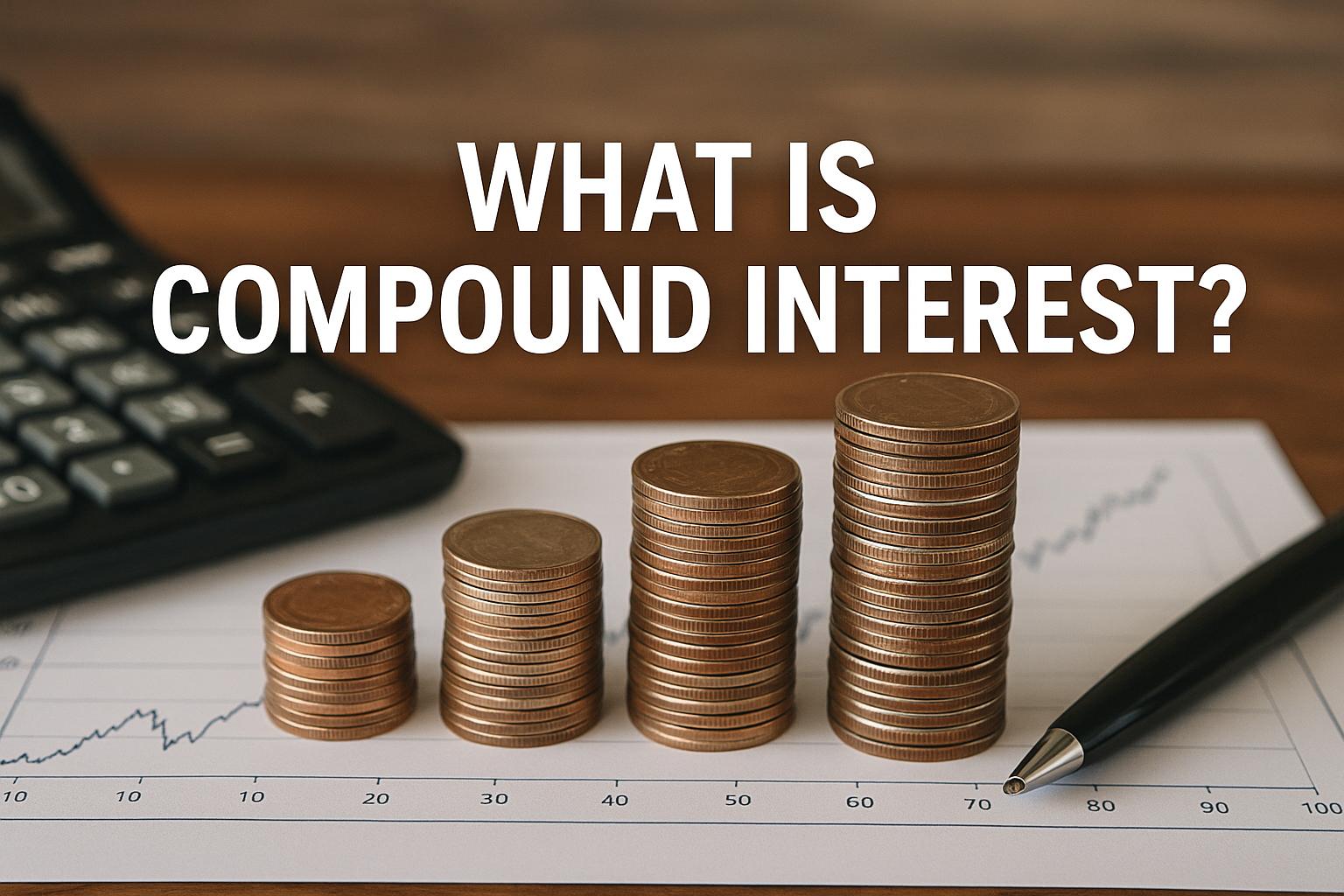
Exploring the Dynamics of Compound Interest
Compound interest is a foundational principle in the financial sector, influencing not only individual monetary dealings but also broader economic strategies. Its widespread impact on savings, investments, and loans necessitates a comprehensive understanding of its mechanisms and applications. By grasping the intricacies of compound interest, individuals can make informed decisions that align with their financial goals.
Diving Deeper into Compound Interest
At its core, compound interest refers to the method of interest calculation that involves adding interest to the principal sum, along with the interest that has previously accrued. This compounding effect results in interest being computed on a growing principal base over designated periods, leading to exponential growth compared to simple interest, which is only calculated on the original principal.
The concept of compound interest is integral in evaluating the growth potential of investments and the cost of accrued interest on borrowed funds. When interest is compounded, it creates a snowball effect, where accrued interest itself earns interest, thus magnifying the effect of time on the initial sum of money.
Understanding the Compound Interest Formula
To compute compound interest, the formula A = P (1 + r/n)^(nt) is employed. Here’s a breakdown of its components:
– A: Represents the future value of an investment or loan, inclusive of the compounded interest.
– P: Denotes the initial principal amount, either deposited as an investment or borrowed as a loan.
– r: The annual nominal interest rate, expressed in decimal form, which influences the rate at which interest compounds.
– n: Indicates how many times the interest compounds in a year.
– t: The time duration for which the money is invested or borrowed, measured in years.
These variables combine to offer clear insight into how compound interest influences long-term financial outcomes. By manipulating these variables, one can calculate how different interest rates, compounding frequencies, and investment durations affect the growth of funds or the increase in debt.
Compound Interest in Action: Practical Examples
Consider an initial investment of $1,000 at an annual interest rate of 5%, compounded annually over a decade. Utilizing the formula, the calculation entails:
A = 1000 (1 + 0.05/1)^(1*10)
This results in a future value of approximately $1,628.89 after ten years, illustrating the significant enhancement that compound interest provides over extended periods. This compounding effect can be especially beneficial in long-term investment scenarios, where the initial capital is allowed to grow exponentially.
Exposure to Compound Interest in Various Financial Contexts
The practical applications of compound interest span multiple financial instruments and decisions. Here, we explore some common scenarios:
Savings Accounts and Investments: By leaving funds in accounts that offer compound interest, individuals can maximize their savings. Additionally, reinvesting earnings within investment vehicles like stocks or bonds facilitates continual growth through compounding, yielding substantial long-term benefits.
Loans and Credit: Conversely, compound interest can also reveal its challenging side when associated with debt. Borrowers must consider the compounding nature of interest on loans and credit cards, as it can significantly increase the total amount due over time. Thus, it’s essential for individuals to understand how compounding affects their repayments and manage their debt accordingly.
The Role of Compounding Frequency in Financial Growth
The impact of compounding is further accentuated by its frequency. The intervals at which compounding occurs can dramatically alter financial outcomes. For example:
Annual Compounding: This is the most straightforward method, where interest is compounded once per year. While straightforward, it does not leverage the maximum potential for growth compared to more frequent compounding periods.
Semi-Annual, Quarterly, and Monthly Compounding: Increasing the number of compounding periods within a year enhances the accumulation rate of interest. More frequent compounding allows for interim interest calculations on the growing principal, progressively compounding past interest and boosting total growth or debt accumulation.
For an investor or borrower, understanding the compounding frequency is key to predicting the final amount of their investment return or their total loan cost.
Strategically Leveraging Compound Interest
Compound interest is a formidable force in the financial realm, capable of accelerating savings growth or escalating debts. By fully understanding its mechanics, individuals can make well-informed financial decisions that promote wealth-building and prevent undue financial burdens.
For tailored insights and strategies related to compound interest and its implications, consulting with a financial advisor is advisable. They can help navigate the complexities of compounding in the context of personal financial goals. Additionally, engaging with educational resources provided by reputable financial institutions can further enhance one’s understanding of compounding and other financial concepts.
Understanding and strategically applying compound interest principles can significantly contribute to effective financial planning, ensuring that both investments grow optimally and debts are managed prudently over time.
Archives: What is collateral?

Understanding Collateral
Collateral is a fundamental concept in the financial world, often associated with securing loans and managing risk. It refers to an asset that a borrower offers to a lender as security for a loan. This asset serves as protection for the lender in case the borrower is unable to repay the loan. Collateral provides a level of assurance to the lender that allows them to extend credit with reduced risk.
The Role of Collateral
The primary purpose of collateral is to reduce the risk for lenders. By having an asset that can be claimed if the borrower defaults, lenders can mitigate their potential losses. This system allows banks and other financial institutions to lend larger sums than they would otherwise, as the presence of collateral decreases the chance of loss. For borrowers, offering collateral can often lead to favorable loan terms, such as lower interest rates or higher borrowing limits. By guaranteeing an asset, borrowers demonstrate their creditworthiness, thereby assuring lenders of their capability and seriousness in repaying the loan.
Types of Collateral
Collateral can take various forms, depending on the type of loan and the agreement between the lender and the borrower. Some common types include:
Real Estate: Properties, such as homes or commercial buildings, are frequently used as collateral for mortgages. This is one of the most common forms of collateral due to the stability and value appreciation of real estate over time. Mortgages, for example, require a property as security, allowing the lender to assume ownership if the borrower defaults on the payment.
Automobiles: Vehicles are often used to secure auto loans, where the car itself serves as the collateral. In cases where the borrower cannot repay the loan, the lender has the right to repossess the vehicle. This makes automobile loans a secured type of lending, distinct from unsecured loans like personal loans.
Financial Assets: Stocks, bonds, and other securities can be pledged as collateral for various types of loans. Such collateral is often used in margin lending, where a brokerage might lend money to a client to buy more stocks on the condition that their existing portfolio has enough value to cover the loan.
Personal Property: In some cases, valuable personal items like jewelry or art may be used as collateral. Although less common, such collateral can be useful for obtaining short-term loans, especially from pawnbrokers or similar lending services.
The Process of Using Collateral
When securing a loan with collateral, the lender assesses the value of the asset being offered. This assessment involves a detailed evaluation to ensure that the collateral is sufficient to cover the loan amount in the event of a default. The asset’s value is determined based on various factors, such as market conditions, asset quality, and liquidity.
Once the value is confirmed, the terms of the collateral agreement, including what happens if the borrower fails to repay, are outlined in a loan contract. This contract specifies the rights and responsibilities of both the borrower and the lender, detailing the conditions under which the lender may seize the collateral. Legal safeguards ensure that the process is fair and transparent, providing clarity and protection for all parties involved.
Risks and Considerations
While collateral provides security for the lender, there are risks involved for the borrower. If the borrower defaults on the loan, they risk losing the pledged asset, which could be substantial. Therefore, it’s important for borrowers to carefully consider their ability to repay before using valuable assets as collateral. The decision to pledge an asset should take into account the borrower’s overall financial situation, potential implications of losing the asset, and alternative borrowing options.
Moreover, market volatility can also affect the value of some types of collateral, particularly financial assets. A sudden depreciation in asset value can lead to a situation where the collateral becomes insufficient to cover the loan, prompting lenders to demand additional assets or prompt repayment to maintain the loan-to-value ratio.
Borrowers should always ensure that they fully understand the contract and the risk it entails. Additionally, seeking financial advice can provide clarity and assist in making informed decisions about which type of collateral to offer and how much to borrow against it.
Overall, collateral plays a crucial role in the lending process, benefiting both lenders and borrowers by providing a safety net that facilitates borrowing and lending. With collateral, lenders are more willing to provide credit, and borrowers can access the funds they need at attractive rates and terms. Understanding how collateral works is essential for anyone involved in financial transactions that require security for loans. Being knowledgeable about collateral helps in making informed decisions, ensuring that both parties are adequately protected and well-positioned to meet their financial goals, leading to a healthier financial landscape for both individuals and institutions.
Archives: What is cash flow from operations?

Understanding Cash Flow from Operations
Cash flow from operations (CFO), a vital aspect of financial analysis, represents the cash generated from a company’s core business activities, such as selling products or services. This financial measure is critical for assessing the financial stability and sustainability of a business, providing a clear picture of its operational health.
Importance of Cash Flow from Operations
Cash flow from operations serves as a key metric of a company’s financial health. Unlike net income, which can be influenced by non-cash items such as depreciation, CFO focuses on actual cash flows generated by operating activities. Therefore, it reflects a more accurate picture of a company’s ability to generate cash for ongoing business needs, payoffs, or investments. Companies with strong operational cash flow are often more appealing to investors as they indicate a well-functioning business, capable of growth and meeting its commitments.
Components of Cash Flow from Operations
To gain meaningful insights from CFO, one must understand its components. The calculation begins with net income, which is subsequently adjusted for non-cash expenses and changes in working capital.
- Net Income: This is the starting point for calculating CFO. It is the profit a company makes after all expenses have been deducted from total revenue.
- Depreciation and Amortization: These are non-cash expenses that do not involve actual cash outflow. They are added back to net income when calculating CFO.
- Changes in Working Capital: This involves adjustments for changes in current assets and liabilities, reflecting the cash tied up in day-to-day business operations. Examples include adjustments to accounts receivable and accounts payable.
Calculating Cash Flow from Operations
The formula to calculate CFO is straightforward:
CFO = Net Income + Non-Cash Expenses + Changes in Working Capital
By applying this formula, companies can better understand their cash position, which aids in making strategic decisions regarding investments or cost management.
Analyzing Cash Flow from Operations
Trend analysis is crucial when examining a company’s CFO. A consistently positive CFO over time generally points to a strong operational foundation. In contrast, prolonged negative CFO might signal potential operational or financial issues. Investors and stakeholders often prioritize companies with solid and growing CFO, as it suggests an inherent capability to maintain and potentially expand operations.
Furthermore, comparing CFO to net income can provide insights into the quality of a company’s earnings. Significant discrepancies between the two may indicate underlying anomalies in reporting practices or the impact of non-recurring events. For instance, if the net income is significantly higher than CFO, it could suggest that earnings are bolstered by accruals that have not yet translated into cash.
Conclusion
In conclusion, cash flow from operations serves as a fundamental indicator of a company’s ability to generate cash through its core operations. Unlike other financial metrics, it provides a clearer view of a company’s operational cash generation capability. As such, it is an invaluable tool for investors, analysts, and business owners, supporting informed and strategic decision-making.
To delve deeper into the nuances of financial statements and cash flow analysis, one could seek out reputable financial resources or consult with finance professionals. Educational materials from respected financial websites and platforms are also recommended for those looking to broaden their understanding in this domain.
Categories
- Uncategorized
 (56)
(56)

Recent Comments