What is compound interest?
- Written by: admin
- Category: Uncategorized
- Published: July 17, 2026
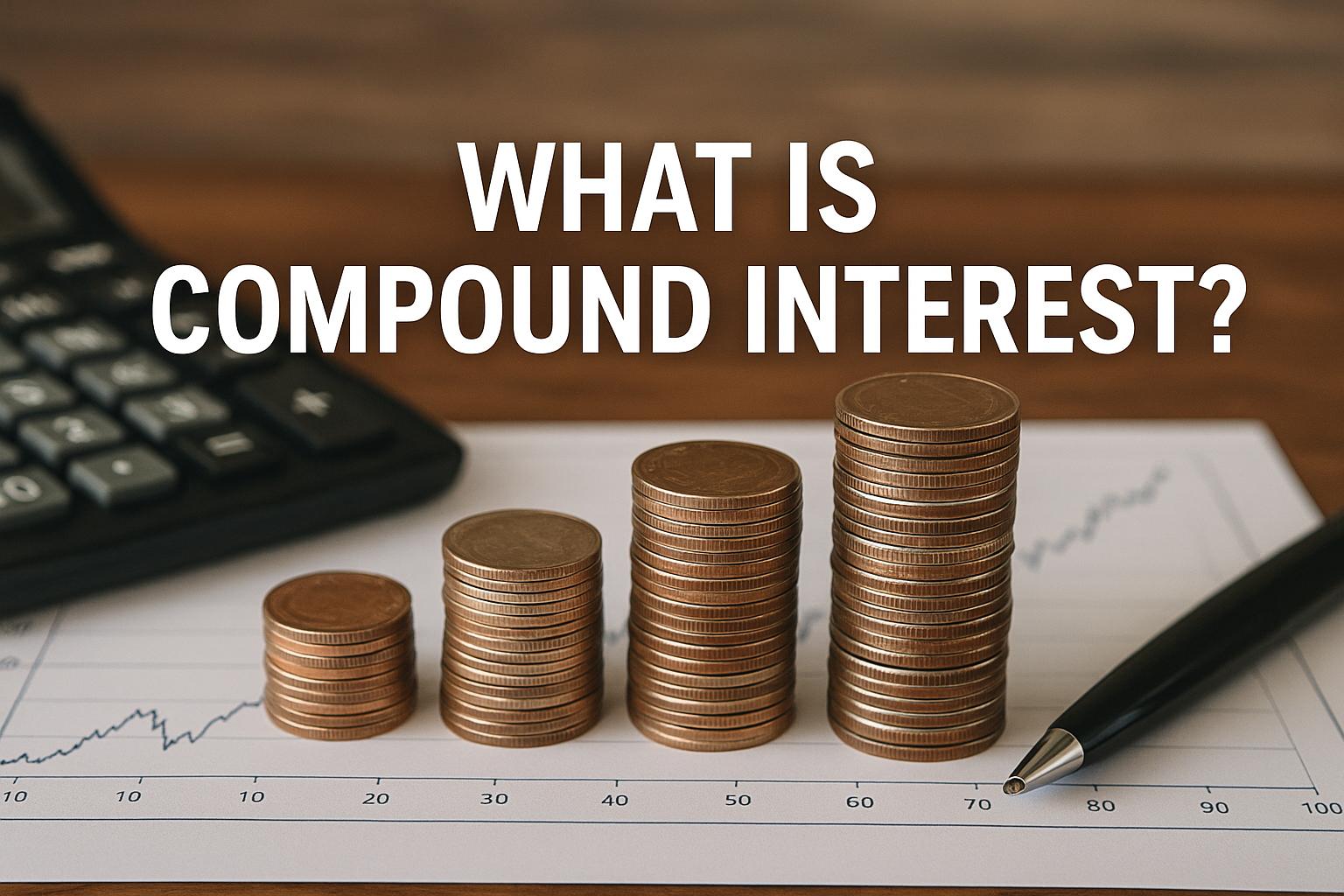
Exploring the Dynamics of Compound Interest
Compound interest is a foundational principle in the financial sector, influencing not only individual monetary dealings but also broader economic strategies. Its widespread impact on savings, investments, and loans necessitates a comprehensive understanding of its mechanisms and applications. By grasping the intricacies of compound interest, individuals can make informed decisions that align with their financial goals.
Diving Deeper into Compound Interest
At its core, compound interest refers to the method of interest calculation that involves adding interest to the principal sum, along with the interest that has previously accrued. This compounding effect results in interest being computed on a growing principal base over designated periods, leading to exponential growth compared to simple interest, which is only calculated on the original principal.
The concept of compound interest is integral in evaluating the growth potential of investments and the cost of accrued interest on borrowed funds. When interest is compounded, it creates a snowball effect, where accrued interest itself earns interest, thus magnifying the effect of time on the initial sum of money.
Understanding the Compound Interest Formula
To compute compound interest, the formula A = P (1 + r/n)^(nt) is employed. Here’s a breakdown of its components:
– A: Represents the future value of an investment or loan, inclusive of the compounded interest.
– P: Denotes the initial principal amount, either deposited as an investment or borrowed as a loan.
– r: The annual nominal interest rate, expressed in decimal form, which influences the rate at which interest compounds.
– n: Indicates how many times the interest compounds in a year.
– t: The time duration for which the money is invested or borrowed, measured in years.
These variables combine to offer clear insight into how compound interest influences long-term financial outcomes. By manipulating these variables, one can calculate how different interest rates, compounding frequencies, and investment durations affect the growth of funds or the increase in debt.
Compound Interest in Action: Practical Examples
Consider an initial investment of $1,000 at an annual interest rate of 5%, compounded annually over a decade. Utilizing the formula, the calculation entails:
A = 1000 (1 + 0.05/1)^(1*10)
This results in a future value of approximately $1,628.89 after ten years, illustrating the significant enhancement that compound interest provides over extended periods. This compounding effect can be especially beneficial in long-term investment scenarios, where the initial capital is allowed to grow exponentially.
Exposure to Compound Interest in Various Financial Contexts
The practical applications of compound interest span multiple financial instruments and decisions. Here, we explore some common scenarios:
Savings Accounts and Investments: By leaving funds in accounts that offer compound interest, individuals can maximize their savings. Additionally, reinvesting earnings within investment vehicles like stocks or bonds facilitates continual growth through compounding, yielding substantial long-term benefits.
Loans and Credit: Conversely, compound interest can also reveal its challenging side when associated with debt. Borrowers must consider the compounding nature of interest on loans and credit cards, as it can significantly increase the total amount due over time. Thus, it’s essential for individuals to understand how compounding affects their repayments and manage their debt accordingly.
The Role of Compounding Frequency in Financial Growth
The impact of compounding is further accentuated by its frequency. The intervals at which compounding occurs can dramatically alter financial outcomes. For example:
Annual Compounding: This is the most straightforward method, where interest is compounded once per year. While straightforward, it does not leverage the maximum potential for growth compared to more frequent compounding periods.
Semi-Annual, Quarterly, and Monthly Compounding: Increasing the number of compounding periods within a year enhances the accumulation rate of interest. More frequent compounding allows for interim interest calculations on the growing principal, progressively compounding past interest and boosting total growth or debt accumulation.
For an investor or borrower, understanding the compounding frequency is key to predicting the final amount of their investment return or their total loan cost.
Strategically Leveraging Compound Interest
Compound interest is a formidable force in the financial realm, capable of accelerating savings growth or escalating debts. By fully understanding its mechanics, individuals can make well-informed financial decisions that promote wealth-building and prevent undue financial burdens.
For tailored insights and strategies related to compound interest and its implications, consulting with a financial advisor is advisable. They can help navigate the complexities of compounding in the context of personal financial goals. Additionally, engaging with educational resources provided by reputable financial institutions can further enhance one’s understanding of compounding and other financial concepts.
Understanding and strategically applying compound interest principles can significantly contribute to effective financial planning, ensuring that both investments grow optimally and debts are managed prudently over time.
This article was last updated on: July 17, 2026